Buy hrcafe.eu ?
We are moving the project
hrcafe.eu .
Are you interested in purchasing the domain
hrcafe.eu ?
domain@kv-gmbh.de · 0541-91531010
Buy hrcafe.eu ?
How do the rated voltage, nominal voltage, and operating voltage differ?
The rated voltage is the maximum voltage that a device can safely handle without being damaged. The nominal voltage is the standard voltage level at which a device is designed to operate efficiently. The operating voltage is the actual voltage at which a device is currently operating. These three values can differ, with the rated voltage being the highest, followed by the nominal voltage, and the operating voltage fluctuating within a certain range depending on the conditions. **
What is the diversity development field?
The diversity development field focuses on creating and promoting inclusive environments within organizations. It involves implementing strategies and programs to support diversity, equity, and inclusion, as well as addressing issues related to bias, discrimination, and inequality. This field also encompasses training, education, and advocacy efforts to foster a culture of respect and belonging for individuals from diverse backgrounds. Overall, the diversity development field aims to create positive and equitable experiences for all members of an organization. **
Similar search terms for Voltage
Top-Angebote
Products related to Voltage:
-
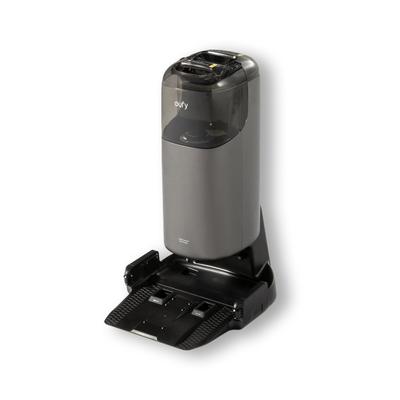
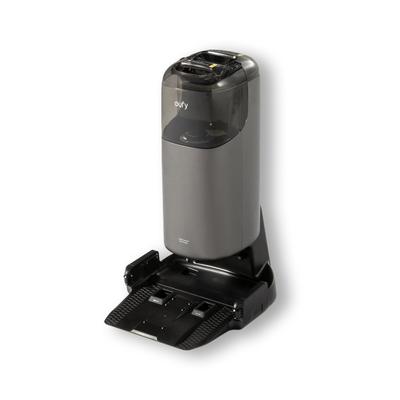
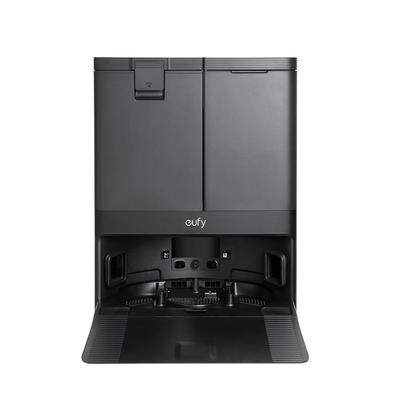
Omni Station (Low Voltage) Blakeeufy Omni Station (Low Votage) Authentic part manufactured by eufy. Compatible with X10 Pro Omni. Note: Power cord and dust bag are not included, You can purchase it through those links: Power cord: https://www.eufy.com/products/t2276111-91 Dust...172,50 $*Shipping: 0,00 $Secure redirect to the provider
-
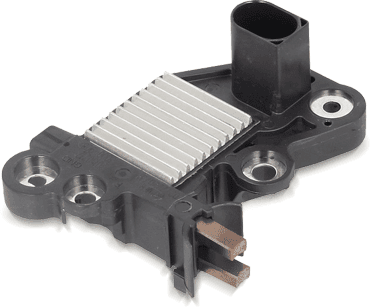
AUTOMEGA 150014810 Alternator voltage regulatorVoltage [V]: 14,7; Manufacturer Restriction: BOSCH; for OE number: 90349907, 1204259; TecDoc Engine Number: 4812, 4759, 4791, 4793, 4810, 4755, 4782, 4785, 4799, 4780, 4735, 4749, 16169; Vehicle Identification Number (VIN) to: S2500015, P4999999, R8999999, R5999999, R4999999, S6000012, R39999995,99 £*Shipping: 8,45 £Secure redirect to the provider
-
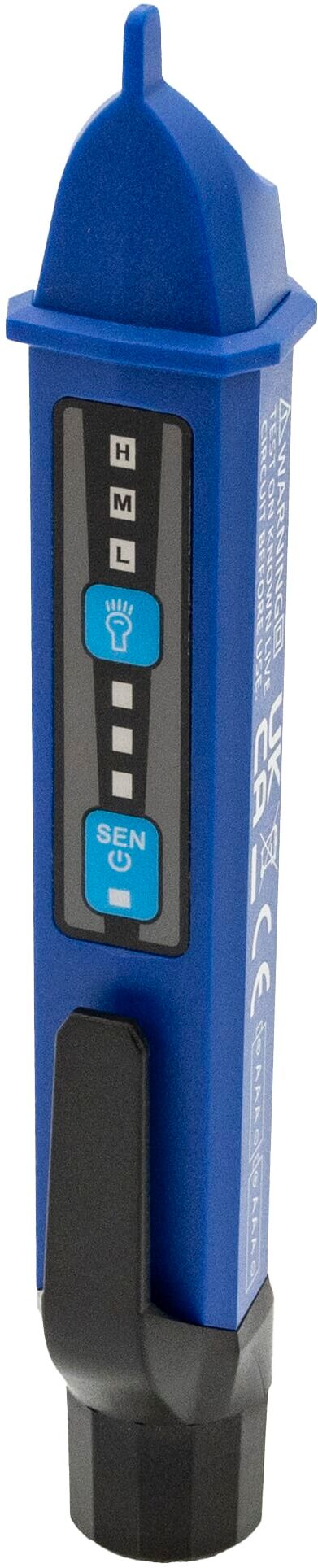
Testo 745 Non-Contact Voltage TesterThe Testo 745 Non-contact Voltage Tester is the perfect tool for fast initial checks of suspected electrical faults. Designed with advanced features to ensure accuracy and safety, it filters high-frequency interference signals and offers a two-stage sensitivity setting. This tester quickly detects AC voltage in systems up to 1000 VAC, making it a reliable choice for HVAC professionals. Key Features Fast Voltage Detection: Quickly checks for the presence of voltage in AC-powered systems. High Sensitivity: Two-stage sensitivity setting to cater to different testing needs. Safe Operation: Detects voltage up to 1000 VAC safely. Clear Indications: Flashing RED LEDs an30,60 £*Shipping: 5,00 £Secure redirect to the provider



-
What are the benefits of diversity?
Diversity brings a variety of perspectives, experiences, and ideas to the table, which can lead to more creative and innovative solutions to problems. It also fosters a more inclusive and welcoming environment, where individuals feel valued and respected for their unique backgrounds and identities. Additionally, diversity can lead to a more well-rounded and comprehensive understanding of different cultures and communities, which can help bridge gaps and promote understanding and empathy. Overall, embracing diversity can lead to a more dynamic and enriching society and workplace. **
-
Where can one find the missing voltage difference between battery voltage and consumer voltage?
The missing voltage difference between battery voltage and consumer voltage can be found in the electrical components that make up the circuit between the battery and the consumer. This could include resistors, capacitors, inductors, or other components that may be affecting the voltage. By analyzing the circuit and using techniques such as Kirchhoff's voltage law and Ohm's law, one can identify and calculate the missing voltage difference. Additionally, using a multimeter to measure the voltage at different points in the circuit can help pinpoint where the voltage drop is occurring. **
-
How do medium voltage, high voltage, and extra-high voltage affect the human body?
Medium voltage, high voltage, and extra-high voltage can all have varying effects on the human body depending on the level of exposure. Medium voltage (1kV to 69kV) can cause burns and muscle contractions, high voltage (69kV to 230kV) can lead to severe burns, cardiac arrest, and even death, while extra-high voltage (above 230kV) can result in instant death due to the high levels of electrical energy passing through the body. It is crucial to exercise caution and follow safety protocols when working with or near these voltage levels to prevent any harm to individuals. **
-
Which voltage converter?
The best voltage converter to use depends on the specific devices you are trying to power and the countries you will be traveling to. For most electronic devices, a voltage converter that can handle a range of voltages (such as 100-240V) is recommended. Additionally, it is important to consider the wattage requirements of your devices to ensure the voltage converter can handle the power load. It is also a good idea to look for a converter that has built-in surge protection to safeguard your devices from power spikes. **
How to calculate resistance and zero voltage using voltage drop?
To calculate resistance using voltage drop, you can use Ohm's Law, which states that resistance (R) is equal to voltage (V) divided by current (I). So, if you know the voltage drop across a resistor and the current flowing through it, you can use Ohm's Law to calculate the resistance. To calculate zero voltage using voltage drop, you can use the concept that zero voltage is the reference point in a circuit. If you measure a voltage drop across a component and it is zero, it means that there is no potential difference across that component, indicating that it is at the same voltage level as the reference point. This can be useful for troubleshooting and understanding the behavior of a circuit. **
What is the maximum voltage drop in low-voltage networks?
The maximum voltage drop in low-voltage networks is typically limited to 5% of the nominal voltage. This means that for a 120V system, the maximum allowable voltage drop would be 6V (5% of 120V). This limit is set to ensure that the voltage at the end of the network is still within an acceptable range for proper operation of connected devices and equipment. Excessive voltage drop can lead to reduced performance and potential damage to electrical equipment. **
Top-Angebote
Products related to Voltage:
-
S1 Pro Station (Low Voltage)S1 Pro Station 1000W (Low Votage) Product Description This listing features the S1 Pro 1000W base station, identifiable by its distinct hexagonal filter design at the bottom (as shown in product images). With enhanced suction power and optimized...405,00 $*Shipping: 0,00 $Secure redirect to the provider
-
Omni Station (Low Voltage) Blakeeufy Omni Station (Low Votage) Authentic part manufactured by eufy. Compatible with X10 Pro Omni. Note: Power cord and dust bag are not included, You can purchase it through those links: Power cord: https://www.eufy.com/products/t2276111-91 Dust...172,50 $*Shipping: 0,00 $Secure redirect to the provider
-
How do the rated voltage, nominal voltage, and operating voltage differ?
The rated voltage is the maximum voltage that a device can safely handle without being damaged. The nominal voltage is the standard voltage level at which a device is designed to operate efficiently. The operating voltage is the actual voltage at which a device is currently operating. These three values can differ, with the rated voltage being the highest, followed by the nominal voltage, and the operating voltage fluctuating within a certain range depending on the conditions. **
-
What is the diversity development field?
The diversity development field focuses on creating and promoting inclusive environments within organizations. It involves implementing strategies and programs to support diversity, equity, and inclusion, as well as addressing issues related to bias, discrimination, and inequality. This field also encompasses training, education, and advocacy efforts to foster a culture of respect and belonging for individuals from diverse backgrounds. Overall, the diversity development field aims to create positive and equitable experiences for all members of an organization. **
-
What are the benefits of diversity?
Diversity brings a variety of perspectives, experiences, and ideas to the table, which can lead to more creative and innovative solutions to problems. It also fosters a more inclusive and welcoming environment, where individuals feel valued and respected for their unique backgrounds and identities. Additionally, diversity can lead to a more well-rounded and comprehensive understanding of different cultures and communities, which can help bridge gaps and promote understanding and empathy. Overall, embracing diversity can lead to a more dynamic and enriching society and workplace. **
-
Where can one find the missing voltage difference between battery voltage and consumer voltage?
The missing voltage difference between battery voltage and consumer voltage can be found in the electrical components that make up the circuit between the battery and the consumer. This could include resistors, capacitors, inductors, or other components that may be affecting the voltage. By analyzing the circuit and using techniques such as Kirchhoff's voltage law and Ohm's law, one can identify and calculate the missing voltage difference. Additionally, using a multimeter to measure the voltage at different points in the circuit can help pinpoint where the voltage drop is occurring. **
Similar search terms for Voltage
-
AUTOMEGA 150014810 Alternator voltage regulatorVoltage [V]: 14,7; Manufacturer Restriction: BOSCH; for OE number: 90349907, 1204259; TecDoc Engine Number: 4812, 4759, 4791, 4793, 4810, 4755, 4782, 4785, 4799, 4780, 4735, 4749, 16169; Vehicle Identification Number (VIN) to: S2500015, P4999999, R8999999, R5999999, R4999999, S6000012, R39999995,99 £*Shipping: 8,45 £Secure redirect to the provider
-
Testo 745 Non-Contact Voltage TesterThe Testo 745 Non-contact Voltage Tester is the perfect tool for fast initial checks of suspected electrical faults. Designed with advanced features to ensure accuracy and safety, it filters high-frequency interference signals and offers a two-stage sensitivity setting. This tester quickly detects AC voltage in systems up to 1000 VAC, making it a reliable choice for HVAC professionals. Key Features Fast Voltage Detection: Quickly checks for the presence of voltage in AC-powered systems. High Sensitivity: Two-stage sensitivity setting to cater to different testing needs. Safe Operation: Detects voltage up to 1000 VAC safely. Clear Indications: Flashing RED LEDs an30,60 £*Shipping: 5,00 £Secure redirect to the provider
-
Arctic Hayes Non-Contact Voltage DetectorArctic Hayes Non-Contact Voltage Detector – 12–1000V AC CAT III 1000V Double Insulated The Arctic Hayes AH12 is a non-contact voltage detector for quickly identifying live AC circuits without needing to touch the conductor. It detects voltage from 12V to 1000V AC at 50/60Hz, giving a red LED flash and an audible alarm together when voltage is present, so it's usable in both bright and low-light conditions and where background noise might make an audible-only signal easy to miss. The body is double insulated for additional protection when working near live circuits, and it's rated CAT III 1000V, the correct category for fixed electrical installations such as distribution boards, fixed wiring, motors and industrial equipment. It also includes a built-in flashlight function for checking connections in poorly lit spaces. Compact and light13,32 £*Shipping: 5,00 £Secure redirect to the provider
-
How do medium voltage, high voltage, and extra-high voltage affect the human body?
Medium voltage, high voltage, and extra-high voltage can all have varying effects on the human body depending on the level of exposure. Medium voltage (1kV to 69kV) can cause burns and muscle contractions, high voltage (69kV to 230kV) can lead to severe burns, cardiac arrest, and even death, while extra-high voltage (above 230kV) can result in instant death due to the high levels of electrical energy passing through the body. It is crucial to exercise caution and follow safety protocols when working with or near these voltage levels to prevent any harm to individuals. **
-
Which voltage converter?
The best voltage converter to use depends on the specific devices you are trying to power and the countries you will be traveling to. For most electronic devices, a voltage converter that can handle a range of voltages (such as 100-240V) is recommended. Additionally, it is important to consider the wattage requirements of your devices to ensure the voltage converter can handle the power load. It is also a good idea to look for a converter that has built-in surge protection to safeguard your devices from power spikes. **
-
How to calculate resistance and zero voltage using voltage drop?
To calculate resistance using voltage drop, you can use Ohm's Law, which states that resistance (R) is equal to voltage (V) divided by current (I). So, if you know the voltage drop across a resistor and the current flowing through it, you can use Ohm's Law to calculate the resistance. To calculate zero voltage using voltage drop, you can use the concept that zero voltage is the reference point in a circuit. If you measure a voltage drop across a component and it is zero, it means that there is no potential difference across that component, indicating that it is at the same voltage level as the reference point. This can be useful for troubleshooting and understanding the behavior of a circuit. **
-
What is the maximum voltage drop in low-voltage networks?
The maximum voltage drop in low-voltage networks is typically limited to 5% of the nominal voltage. This means that for a 120V system, the maximum allowable voltage drop would be 6V (5% of 120V). This limit is set to ensure that the voltage at the end of the network is still within an acceptable range for proper operation of connected devices and equipment. Excessive voltage drop can lead to reduced performance and potential damage to electrical equipment. **
* All prices are inclusive of VAT and, if applicable, plus shipping costs. The offer information is based on the details provided by the respective shop and is updated through automated processes. Real-time updates do not occur, so deviations can occur in individual cases. ** Note: Parts of this content were created by AI.