Buy hrcafe.eu ?
We are moving the project
hrcafe.eu .
Are you interested in purchasing the domain
hrcafe.eu ?
domain@kv-gmbh.de · 0541-91531010
Buy hrcafe.eu ?
Is there a difference between a rectifier and a bridge rectifier?
Yes, there is a difference between a rectifier and a bridge rectifier. A rectifier is a device that converts alternating current (AC) to direct current (DC) by allowing current to flow in only one direction. A bridge rectifier is a type of rectifier that uses four diodes in a bridge configuration to rectify AC voltage. The main difference is that a bridge rectifier is more efficient and can handle higher currents compared to a simple rectifier. **
What is the difference between a center-tapped rectifier and a bridge rectifier?
A center-tapped rectifier uses a transformer with a center tap on the secondary winding, while a bridge rectifier uses a configuration of diodes to rectify the AC input voltage. The center-tapped rectifier requires a transformer with a center tap, which may be more expensive and bulky, while the bridge rectifier does not require a center-tapped transformer and is more commonly used in practical applications. Additionally, the center-tapped rectifier only uses two diodes, while the bridge rectifier uses four diodes, making it more efficient in terms of voltage drop and power loss. **

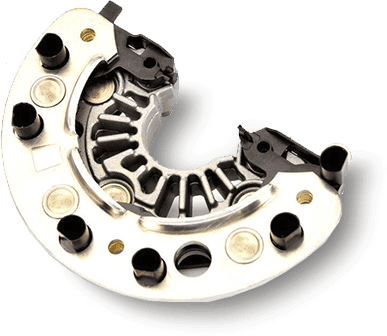
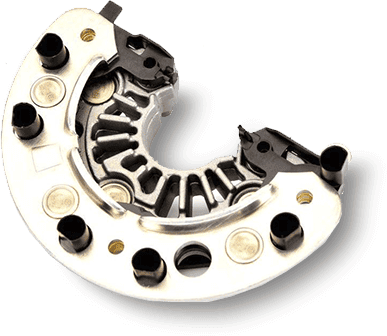
Similar search terms for Rectifier
Top-Angebote
Products related to Rectifier:
-
Anker Plus Member BenefitsShipping Service Free Next-Day Shipping (1 Item per Month) Free Express Shipping (1 Item per Month) AnkerCredits Rewards Earn 1.5 AnkerCredits for Every $1 Spent (Upgraded Benefit) Access Exclusive Redemption Products Warranty Extra 6-month extended...99,99 $*Shipping: 0,00 $Secure redirect to the provider
-
DEVERA 9-Door Employee Storage Metal LockerHighlights Ample Storage & Organization: Featuring 9 large compartments, this employee locker provides generous space for individualized storage. Suitable for various settings, including schools, homes, restaurants, garages, locker rooms, and dorms.288,57 $*Shipping: 0,00 $Secure redirect to the provider
-
Uplifted Finds Predatory Engagement Wrestling Puppet Hub Predatory Engagement Wrestling Puppet HubTransform interactive play with the PredatoryEngagement Puppet, a professionalgrade interaction module engineered with manualsimulation logic. This highutility tool features a reinforced plush architecture and poseable limbs, specifically designed...85,97 $*Shipping: 0,00 $Secure redirect to the provider



-
How does a rectifier work?
A rectifier is an electrical device that converts alternating current (AC) to direct current (DC). It does this by utilizing diodes, which are electronic components that only allow current to flow in one direction. When the AC current passes through the rectifier, the diodes block the negative portion of the wave, allowing only the positive portion to pass through, resulting in a pulsating DC output. This pulsating DC can then be smoothed out using capacitors to create a more stable DC output. **
-
How do you connect a rectifier?
To connect a rectifier, you would typically start by identifying the input and output terminals of the rectifier. The input terminals are usually labeled as AC or alternating current, while the output terminals are labeled as DC or direct current. You would then connect the AC input terminals to the power source, such as a transformer or generator, and the DC output terminals to the load or device that requires the rectified DC power. It's important to ensure that the polarity of the connections is correct to avoid damaging the rectifier or the connected devices. Additionally, you may need to use appropriate wiring and connectors to make the connections secure and safe. **
-
What is a center-tap rectifier?
A center-tap rectifier is a type of full-wave rectifier circuit that uses a center-tapped transformer to convert alternating current (AC) to direct current (DC). The center-tapped transformer has a secondary winding with a center tap, which allows for the creation of two separate but equal voltage outputs. This configuration allows for both halves of the input AC waveform to be used, resulting in a more efficient conversion of AC to DC compared to a half-wave rectifier. Center-tap rectifiers are commonly used in power supply circuits for electronic devices. **
-
How does this rectifier work exactly?
A rectifier works by converting alternating current (AC) into direct current (DC). It does this by using diodes, which are electronic components that allow current to flow in only one direction. When the AC current passes through the diodes, they effectively "chop off" the negative portion of the wave, leaving only the positive portion to create a pulsating DC output. This pulsating DC can then be smoothed out using capacitors to create a more steady DC output. Overall, the rectifier allows for the conversion of AC to DC, which is essential for many electronic devices and power systems. **


What is a three-phase rectifier?
A three-phase rectifier is an electrical device used to convert three-phase alternating current (AC) into direct current (DC). It typically consists of six diodes arranged in a specific configuration to rectify the three-phase AC input. The rectified output is then used to power various types of electrical equipment and devices that require DC power. Three-phase rectifiers are commonly used in industrial and commercial applications where three-phase power is available. **
When should a rectifier be used?
A rectifier should be used when there is a need to convert alternating current (AC) to direct current (DC). This is commonly required in electronic devices and power supplies that operate on DC power. Rectifiers are essential in ensuring that the correct type of electrical current is supplied to the device, preventing damage or malfunction. They are commonly used in various applications such as battery charging, signal processing, and power transmission. **
Top-Angebote
Products related to Rectifier:
-
Anker Plus Member BenefitsShipping Service Free Next-Day Shipping (1 Item per Month) Free Express Shipping (1 Item per Month) AnkerCredits Rewards Earn 1.5 AnkerCredits for Every $1 Spent (Upgraded Benefit) Access Exclusive Redemption Products Warranty Extra 6-month extended...99,99 $*Shipping: 0,00 $Secure redirect to the provider
-
Is there a difference between a rectifier and a bridge rectifier?
Yes, there is a difference between a rectifier and a bridge rectifier. A rectifier is a device that converts alternating current (AC) to direct current (DC) by allowing current to flow in only one direction. A bridge rectifier is a type of rectifier that uses four diodes in a bridge configuration to rectify AC voltage. The main difference is that a bridge rectifier is more efficient and can handle higher currents compared to a simple rectifier. **
-
What is the difference between a center-tapped rectifier and a bridge rectifier?
A center-tapped rectifier uses a transformer with a center tap on the secondary winding, while a bridge rectifier uses a configuration of diodes to rectify the AC input voltage. The center-tapped rectifier requires a transformer with a center tap, which may be more expensive and bulky, while the bridge rectifier does not require a center-tapped transformer and is more commonly used in practical applications. Additionally, the center-tapped rectifier only uses two diodes, while the bridge rectifier uses four diodes, making it more efficient in terms of voltage drop and power loss. **
-
How does a rectifier work?
A rectifier is an electrical device that converts alternating current (AC) to direct current (DC). It does this by utilizing diodes, which are electronic components that only allow current to flow in one direction. When the AC current passes through the rectifier, the diodes block the negative portion of the wave, allowing only the positive portion to pass through, resulting in a pulsating DC output. This pulsating DC can then be smoothed out using capacitors to create a more stable DC output. **
-
How do you connect a rectifier?
To connect a rectifier, you would typically start by identifying the input and output terminals of the rectifier. The input terminals are usually labeled as AC or alternating current, while the output terminals are labeled as DC or direct current. You would then connect the AC input terminals to the power source, such as a transformer or generator, and the DC output terminals to the load or device that requires the rectified DC power. It's important to ensure that the polarity of the connections is correct to avoid damaging the rectifier or the connected devices. Additionally, you may need to use appropriate wiring and connectors to make the connections secure and safe. **
Similar search terms for Rectifier
-
DEVERA 9-Door Employee Storage Metal LockerHighlights Ample Storage & Organization: Featuring 9 large compartments, this employee locker provides generous space for individualized storage. Suitable for various settings, including schools, homes, restaurants, garages, locker rooms, and dorms.288,57 $*Shipping: 0,00 $Secure redirect to the provider
-
Uplifted Finds Predatory Engagement Wrestling Puppet Hub Predatory Engagement Wrestling Puppet HubTransform interactive play with the PredatoryEngagement Puppet, a professionalgrade interaction module engineered with manualsimulation logic. This highutility tool features a reinforced plush architecture and poseable limbs, specifically designed...85,97 $*Shipping: 0,00 $Secure redirect to the provider
-
DEVERA 6-Door Employee Storage Metal Locker for OfficeHighlights Ample Storage & Organization: Featuring six large compartments, this employee locker provides generous space for individualized storage. Suitable for various settings, including schools, homes, restaurants, garages, locker rooms, and dorms.259,99 $*Shipping: 0,00 $Secure redirect to the provider
-
Inspire Select Interactive Training Card Set Observation, Logic & Thinking Skill Development Puzzle Cards For Kids intermediateIntroduction Help young minds develop stronger focus, reasoning, and creativity with this engaging training card set designed for handson learning. Each card features fun, interactive challenges that build observation, memory, and problemsolving...40,98 $*Shipping: 0,00 $Secure redirect to the provider
-
What is a center-tap rectifier?
A center-tap rectifier is a type of full-wave rectifier circuit that uses a center-tapped transformer to convert alternating current (AC) to direct current (DC). The center-tapped transformer has a secondary winding with a center tap, which allows for the creation of two separate but equal voltage outputs. This configuration allows for both halves of the input AC waveform to be used, resulting in a more efficient conversion of AC to DC compared to a half-wave rectifier. Center-tap rectifiers are commonly used in power supply circuits for electronic devices. **
-
How does this rectifier work exactly?
A rectifier works by converting alternating current (AC) into direct current (DC). It does this by using diodes, which are electronic components that allow current to flow in only one direction. When the AC current passes through the diodes, they effectively "chop off" the negative portion of the wave, leaving only the positive portion to create a pulsating DC output. This pulsating DC can then be smoothed out using capacitors to create a more steady DC output. Overall, the rectifier allows for the conversion of AC to DC, which is essential for many electronic devices and power systems. **
-
What is a three-phase rectifier?
A three-phase rectifier is an electrical device used to convert three-phase alternating current (AC) into direct current (DC). It typically consists of six diodes arranged in a specific configuration to rectify the three-phase AC input. The rectified output is then used to power various types of electrical equipment and devices that require DC power. Three-phase rectifiers are commonly used in industrial and commercial applications where three-phase power is available. **
-
When should a rectifier be used?
A rectifier should be used when there is a need to convert alternating current (AC) to direct current (DC). This is commonly required in electronic devices and power supplies that operate on DC power. Rectifiers are essential in ensuring that the correct type of electrical current is supplied to the device, preventing damage or malfunction. They are commonly used in various applications such as battery charging, signal processing, and power transmission. **
* All prices are inclusive of VAT and, if applicable, plus shipping costs. The offer information is based on the details provided by the respective shop and is updated through automated processes. Real-time updates do not occur, so deviations can occur in individual cases. ** Note: Parts of this content were created by AI.